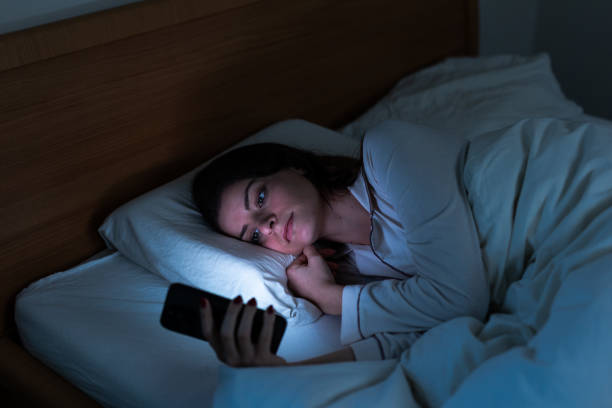
What Actually Happens to Your Brain at Night
As it gets dark, your brain begins producing melatonin, a hormone that signals your body it is time to sleep. This is a natural, biological process that has existed for thousands of years. The problem is that the blue light emitted from phone screens is almost identical to sunlight. When your brain detects this light, it stops melatonin production completely and treats the situation as daytime.
The result is that even if your body feels exhausted, your brain is convinced it should stay awake. You lie in bed feeling tired but unable to fall asleep. You keep scrolling to pass the time. The cycle repeats every night.
On top of the light problem, social media feeds, news apps, and video platforms are engineered to keep your attention. Each new post triggers a small release of dopamine in your brain, the same chemical released by gambling and junk food. This keeps you mentally stimulated and alert at exactly the time you need to be winding down.
Using your phone for just 30 minutes before bed can delay sleep onset by up to 1.5 hours and reduce deep sleep quality by nearly 20 percent, according to sleep research studies.
The Real Cost of Poor Sleep
Poor sleep is not just about feeling groggy in the morning. Over time, consistently bad sleep affects nearly every area of your life:
-
1Focus and Productivity Drop
Sleep deprivation reduces your ability to concentrate, make decisions, and remember information. One bad night is enough to significantly impact your performance the next day.
-
2Mood and Mental Health Suffer
Lack of sleep is directly linked to increased anxiety, irritability, and depression. Your emotional resilience depends heavily on how well you sleep each night.
-
3Physical Health Is at Risk
Chronic poor sleep weakens your immune system, raises stress hormone levels, and has been associated with increased risk of weight gain and heart disease.
-
4Screen Time Addiction Worsens
The less you sleep, the weaker your self-control becomes. This makes it harder to resist reaching for your phone the next night, creating a repeating cycle that gets worse over time.
5 Practical Steps to Stop Late-Night Phone Use
You do not need extreme willpower to change this habit. The most effective approach is to set up your environment so the right choice becomes the easy choice.
-
1Set a Daily Phone Curfew
Choose a fixed time each evening, for example 10 PM, after which you will not open social media, news, or video apps. Write this time down and commit to it for one week. The key is consistency, not perfection.
-
2Use an App Blocker to Enforce It
Willpower alone is unreliable, especially when you are tired. An app blocker automatically prevents you from opening distracting apps after your chosen curfew time. When the app is blocked, the temptation disappears entirely.
-
3Enable a Screen Dimmer for Late Use
If you genuinely need your phone at night, for example to set an alarm, use a screen dimmer to reduce brightness and filter blue light. This minimizes the impact on your melatonin levels and makes it easier to fall asleep after.
-
4Charge Your Phone Outside the Bedroom
This is one of the simplest and most effective changes you can make. If your phone is not within reach, the habit of picking it up disappears automatically. Keep your charger in the living room or hallway instead.
-
5Replace Scrolling with a Tracked Habit
Build a short pre-sleep routine, such as 10 minutes of reading, light stretching, or writing down three things from your day. Track this habit daily so it gradually becomes automatic and replaces the phone-scrolling pattern.
The first three nights of a new bedtime habit are the most difficult. Research shows that after seven consistent days, most people report the new routine feels natural and they rarely miss the old behavior.
Dobiko Task handles all of this automatically
App Guard blocks distracting apps on a schedule you set. Screen Dimmer reduces harsh light at night. Habit Tracker helps you build a consistent bedtime routine. Everything works completely offline, no account needed.
Try It FreeHow to Get Started Tonight
You do not need to make a drastic change all at once. Start with one small step this evening. Pick a curfew time that feels realistic, even if it is just 30 minutes earlier than your current habit. Block one or two of your most-used apps after that time.
Do this for seven days without skipping. Notice how you feel in the mornings. Most people are genuinely surprised by how much their energy, mood, and focus improve within the first week.
Your phone is a powerful tool. The goal is not to avoid it entirely but to be in control of when and how you use it, rather than letting the app design control you.
The Bottom Line
Late-night phone use is one of the most common and damaging habits in modern life. The good news is that it is also one of the easiest to fix once you have the right systems in place. A scheduled app block, a screen dimmer, and a simple bedtime routine can completely transform your sleep quality in just a few days.
Better sleep means better focus, better mood, and better health. It starts tonight.